
Command Palette
Search for a command to run...
Command Palette
Search for a command to run...
NATO's Arsenal in 2026: Rifles, Handguns, and the Ammunition That Binds 32 Armies
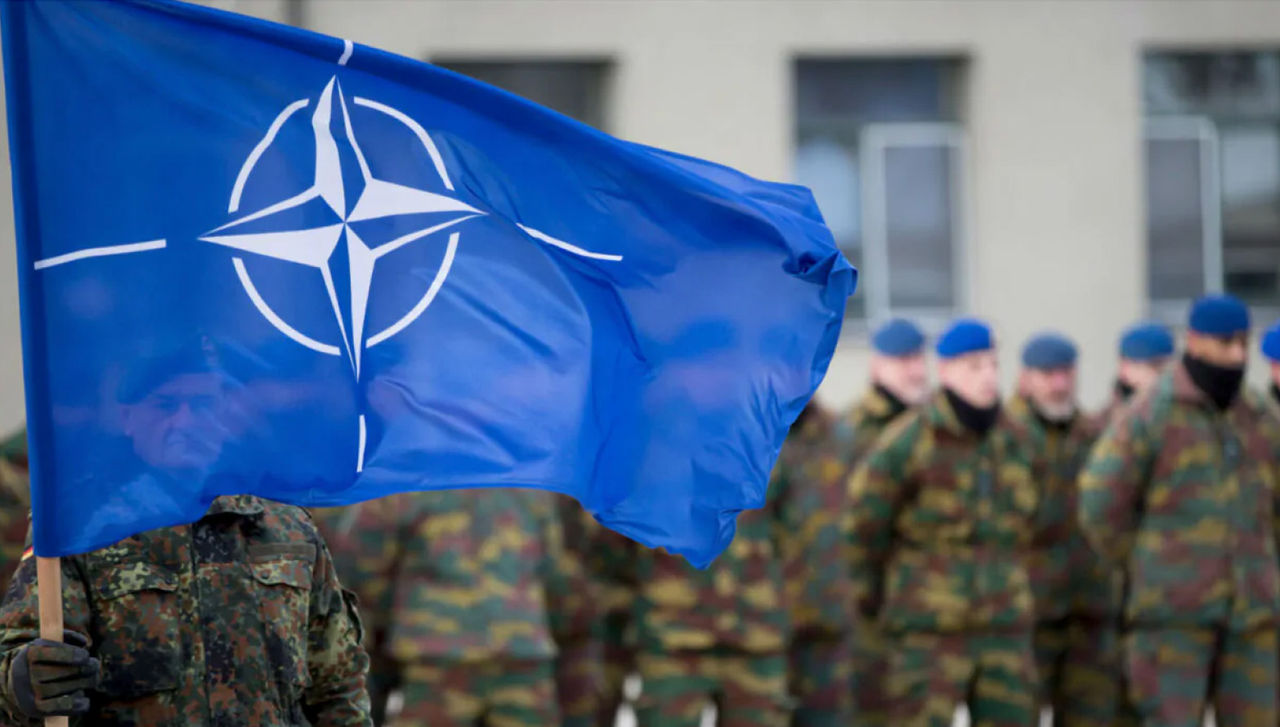
With 32 member nations and dozens of different weapons platforms, NATO's standardization agreements ensure every soldier can share ammunition and logistics with any ally — but cracks are forming as the US pivots to a new caliber.

One Alliance, 32 Armies — And the Rules That Keep Them Armed Together
NATO is the most powerful military alliance in history, but coordinating 32 member nations — each with its own defense industry, procurement traditions, and strategic priorities — is a logistical challenge of staggering complexity. The answer, developed over decades, is a framework of Standardization Agreements known as STANAGs. These documents define everything from the pressure specifications of rifle cartridges to the dimensions of magazine wells, ensuring that a French soldier running low on ammunition in a joint operation can reload from a German supply truck without a second thought. In 2026, that framework remains intact — though it is under its most significant pressure in a generation, as the United States begins fielding a new caliber that no other NATO member currently uses.
What Is a STANAG and Why Does It Exist?
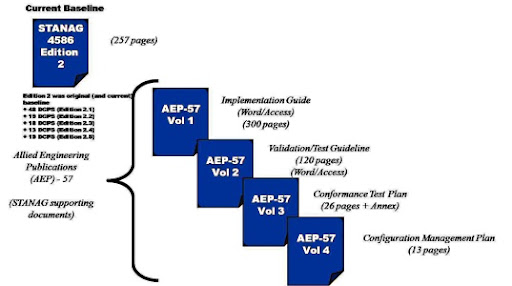
A Standardization Agreement — STANAG — is a formal NATO document that establishes common specifications, procedures, and equipment standards across member nations. Published by the NATO Standardization Office in Brussels, STANAGs cover an enormous range of military subjects: fuel grades, radio frequencies, map symbols, and crucially, weapons and ammunition. Each member state ratifies relevant STANAGs and implements them within its own armed forces. The core purpose is interoperability — the ability for allied forces to operate side by side and support one another without friction. On the battlefield, this means a NATO soldier whose ammunition runs dry can accept a reload from any allied unit without worrying about caliber compatibility. At the logistics level, it means supply chains can be consolidated rather than duplicated across dozens of national inventories. The savings in cost, complexity, and operational risk are enormous.
The Standard Rifle Caliber: 5.56x45mm NATO
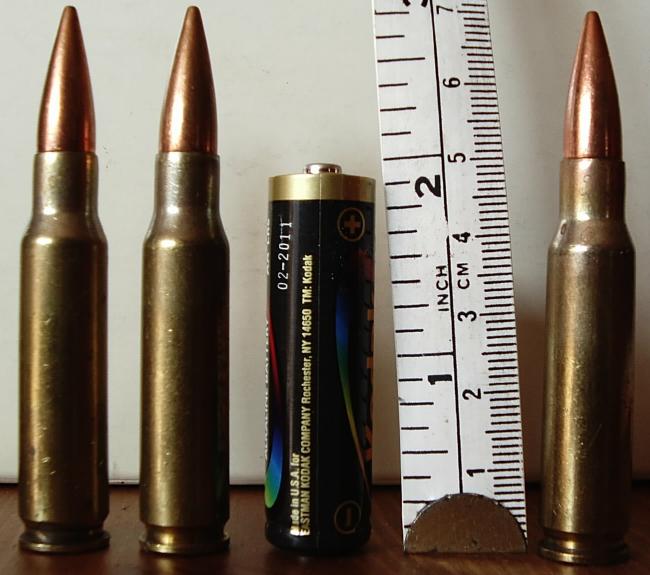
The most consequential small-arms STANAG in history is STANAG 4172, which in October 1980 standardized the 5.56x45mm cartridge as NATO's second standard service rifle caliber. The process began in 1977 when NATO members agreed that the then-standard 7.62x51mm NATO round — itself a Cold War-era successor to the American .30-06 Springfield — was too heavy and powerful for the lighter, faster rifles modern infantry tactics demanded. After competitive trials, the Belgian SS109 projectile was selected as the basis for the new standard, chosen over the American M193 round already in use. The result was a cartridge that allowed soldiers to carry more than twice the ammunition by weight compared to 7.62mm, while still delivering effective terminal performance at typical combat distances. The 5.56x45mm NATO round remains the standard infantry rifle caliber for the majority of NATO members in 2026. It is fired from the M4 carbine (United States), the HK416 (France, Norway, Germany), the C8 (Canada), and numerous other nationally fielded platforms — all chambered to the same STANAG specification.
The Larger Round That Never Left: 7.62x51mm NATO
Despite the widespread adoption of 5.56mm, the original STANAG 2310 cartridge — 7.62x51mm NATO — never disappeared from NATO arsenals. It remains the standard caliber for general-purpose machine guns, designated marksman rifles, and sniper systems across virtually all member nations. The HK417, the FN SCAR-H, the M110 Semi-Automatic Sniper System, and the L129A1 (UK) all chamber 7.62x51mm. The reasoning is straightforward: while 5.56mm is optimal for individual infantry, engagements beyond 600 meters — sniping, vehicle-mounted fire, and suppression of fortified positions — benefit enormously from the heavier round's ballistic performance and barrier penetration. NATO's two-caliber rifle doctrine, with 5.56mm for standard infantry and 7.62mm for specialist roles, has remained essentially unchanged for over four decades.
Handguns: The 9mm Standard and What Members Actually Carry
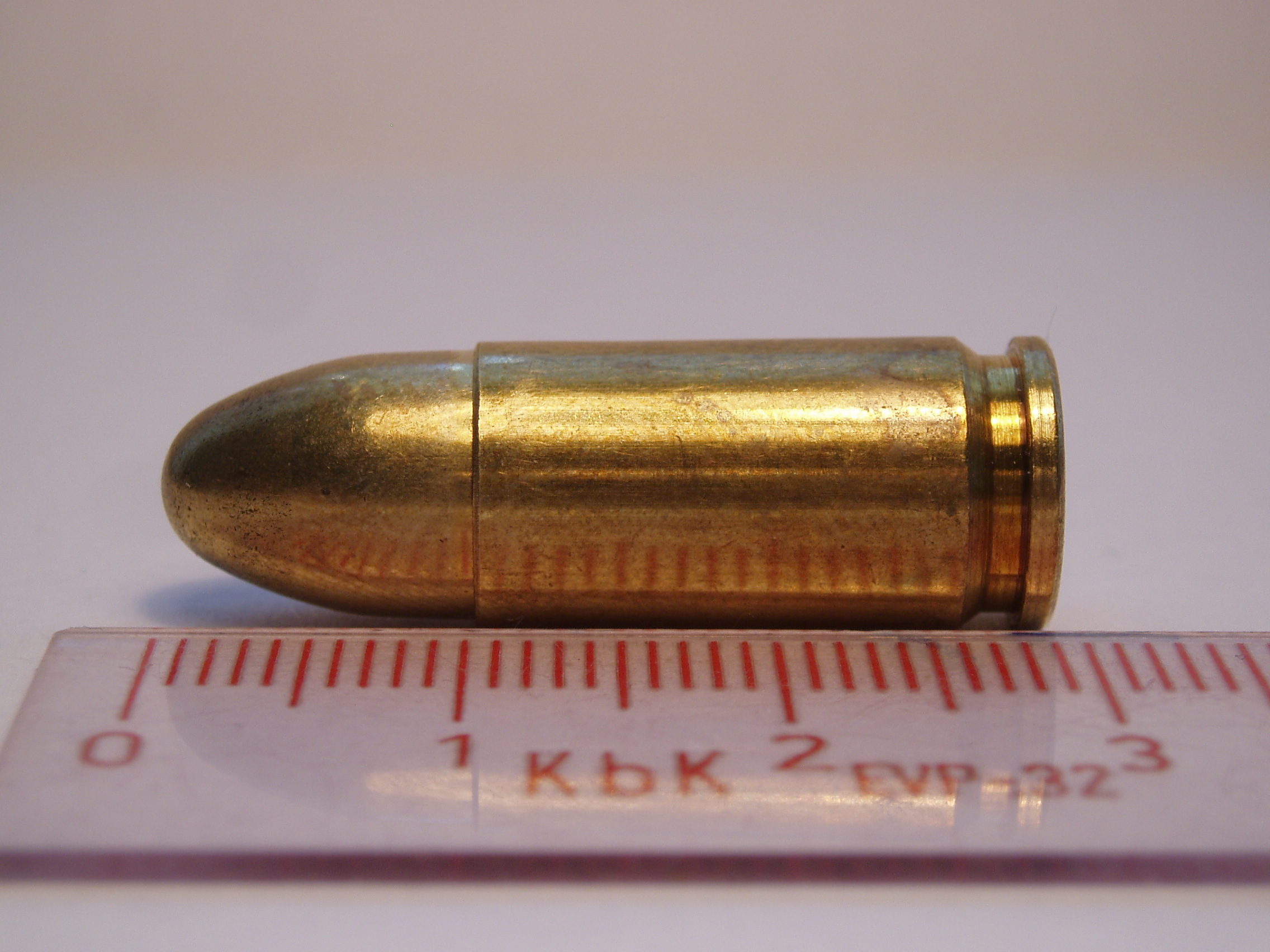
For pistols, NATO settled on 9x19mm Parabellum as the standard handgun cartridge decades ago, and it remains universal across the alliance in 2026. What NATO does not mandate is which pistol to use — and the diversity of service pistols across member nations reflects that freedom. The United States Army officially replaced the Beretta M9 in 2017 with the SIG Sauer P320, designated the M17 (full-size) and M18 (compact), under a contract worth $580 million. Most other NATO members use the Glock 17 or Glock 19 — both chambered in 9mm NATO — which dominate European military and law enforcement procurement due to their reliability, simplicity, and established supply chains. The UK armed forces long carried the Browning Hi-Power before transitioning to the Glock 17. Canada issues the SIG Sauer P226. Germany uses the Heckler & Koch P8. All fire 9x19mm NATO, ensuring that whatever the sidearm, ammunition is always interchangeable across allied forces.
The Rifle Landscape: No Single Standard Weapon, But a Common Platform Logic
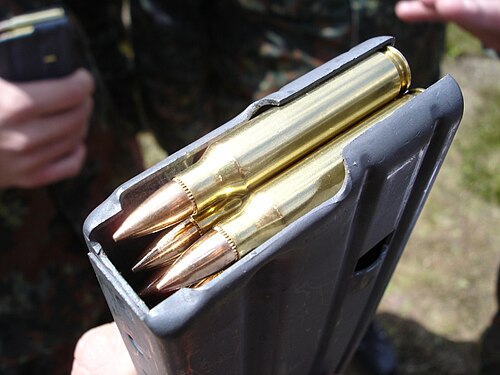
There is no NATO-mandated standard service rifle — only a mandated caliber. Individual nations procure whichever 5.56mm platform best fits their doctrine, industry agreements, and budget. That said, the HK416 has emerged as the de facto consensus choice for many members. France replaced the FAMAS with the HK416 F in 2017. Norway has fielded it since the early 2000s. The US Marine Corps adopted it as the M27 Infantry Automatic Rifle. Germany is in the process of replacing the G36 with the HK416 A8. The magazine interface that makes this flexibility possible is governed by STANAG 4179, which proposed standardizing the M16's magazine dimensions as a common NATO format. Though technically a draft standard that was never formally ratified, STANAG 4179 has been so widely adopted that the "STANAG magazine" — the familiar 30-round aluminum or polymer box magazine — is accepted by virtually every NATO rifle currently in service. A soldier can move from an M4 to an HK416 to a SCAR-L without changing magazines or ammunition.
The Looming Disruption: America's 6.8mm Pivot
The most significant challenge to NATO ammunition standardization in decades arrived in 2022, when the United States Army selected SIG Sauer's XM5 — now designated the M7 rifle — as its next-generation service weapon under the Next Generation Squad Weapons (NGSW) program. The M7 chambers the 6.8x51mm Common Cartridge (.277 Fury), a round specifically designed to defeat modern body armor threats at extended ranges. Fielding of the M7 began in March 2024, initially to close-combat units. The caliber change poses a real interoperability challenge: for the first time since 1980, front-line US infantry will carry a caliber that no other NATO member currently issues. Analysts at Army Recognition noted in 2024 that the NGSW program is "a challenge for NATO army interoperability," raising questions about resupply in coalition operations and whether allies will eventually be pressured to follow the US lead. No other NATO member has announced plans to adopt 6.8x51mm, and the transition is expected to be gradual rather than immediate — the M4 will remain in wide US service for years — but the long-term implications for the alliance's standardization framework are significant.
What Standardization Means in Practice — and Where It Holds
For firearms owners and military enthusiasts, NATO standardization is more than bureaucratic paperwork. It is the reason that 5.56mm and 7.62mm NATO ammunition is produced to identical pressure and dimensional specifications by manufacturers in dozens of countries, making those rounds globally available and commercially interchangeable. It is why STANAG-pattern magazines are produced by hundreds of aftermarket manufacturers worldwide. It is why the 9mm cartridge has become not just a NATO standard but effectively the global standard for law enforcement and military sidearms. In 2026, the core of that framework — 5.56mm for infantry rifles, 7.62mm for support weapons, 9mm for handguns — remains in force and is observed by every NATO member. The alliance's ability to operate as a unified force, rather than 32 separate national armies, continues to rest in large part on the quiet, unglamorous work of standardization committees that decided decades ago what shape a magazine well should be.
Sources: NATO Standardization Office | Wikipedia — 5.56×45mm NATO | Army Recognition — NGSW NATO Interoperability | US Army — M7 Rifle Type Classification | Wikipedia — STANAG Magazine | Calibre Magazine — US XM5 NATO Future | Palmetto State Armory — NATO Ammunition Explained
Written by
Eugene Warren
The Gun Database contributor