
Command Palette
Search for a command to run...
Command Palette
Search for a command to run...
A Retired Powerhouse: The IWI Jericho 941 and Its Global Law Enforcement Legacy
From Israeli police holsters to law enforcement arsenals across four continents — the story of the IWI Jericho 941, its CZ-75 roots, and why it became a global service pistol.

Born in the Holy Land: The Origins of the Jericho 941
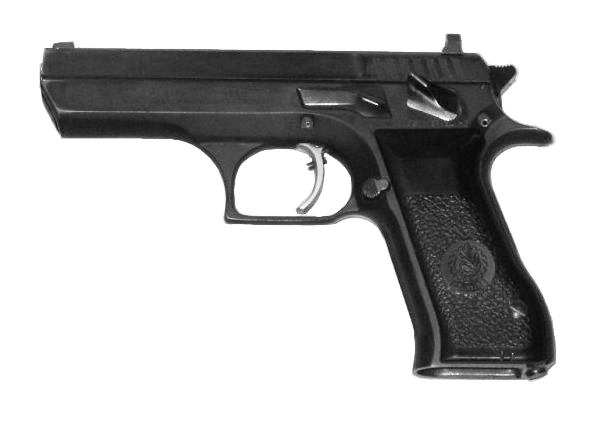
In 1990, Israel Military Industries — today known as Israel Weapon Industries, or IWI — introduced a handgun that would quietly become one of the most respected service pistols of its era. Named after the ancient city of Jericho, the 941 was developed at a time when Israel's security apparatus demanded a modern, high-capacity sidearm capable of meeting the demands of both military and police service in one of the world's most volatile regions. What emerged was a pistol that blended proven European engineering with Israeli manufacturing pragmatism, producing a weapon that would serve law enforcement and security forces across multiple continents for over three decades.
Standing on the Shoulders of Giants: The CZ-75 Connection
To understand the Jericho 941, you must understand the CZ-75 — the Czechoslovak masterpiece designed by František Koucký in 1975 that many consider the finest double-action pistol design of the twentieth century. IMI chose the CZ-75's short-recoil, locked-breech mechanism as the foundation for the Jericho and partnered with the Italian manufacturer Tanfoglio, which had been producing CZ-75 variants for years. This arrangement allowed IMI to bypass the costly and time-consuming development phase that plagues new pistol designs and instead focus on refinement and Israeli-specific modifications.
The Jericho 941 diverged from the CZ-75 in important ways. Where the CZ-75 used a traditionally rifled barrel, the Jericho introduced a polygonal barrel — a design that offers slightly higher velocity, improved gas sealing, and greater barrel longevity. The Jericho also added a frame-mounted manual safety, enabling the gun to be carried cocked-and-locked in single-action mode or hammer-down in double-action mode. The result was a heavier, more robust pistol than its Czechoslovak inspiration, one optimized for hard professional use rather than competitive sport shooting.
Israel's Standard: Police and Military Service Adoption
The Jericho 941 entered Israeli Police service in 1990 and quickly became the standard sidearm of the Israel Border Police and numerous other security branches within the Israeli system. Israel's intelligence and internal security services — Shin Bet and related agencies — also adopted the Jericho as their standard close-protection sidearm, where its reliability in harsh Middle Eastern conditions and its capacity for a 16+1 round load in the full-size configuration were particularly valued. The Israeli Defense Forces issued the Jericho to specific units, supplementing the older Beretta M1951 and Browning Hi-Power pistols that had served Israeli forces for decades.
The Jericho served the Israeli Police as its primary service pistol until it was eventually phased out in favor of the Glock 19 — a transition that reflected a global law enforcement trend toward lighter, polymer-framed pistols in the 2000s and 2010s. For over twenty years, however, the Jericho 941 was the gun Israeli officers carried in one of the world's most demanding operational environments.
Going Global: Law Enforcement Adoption Around the World
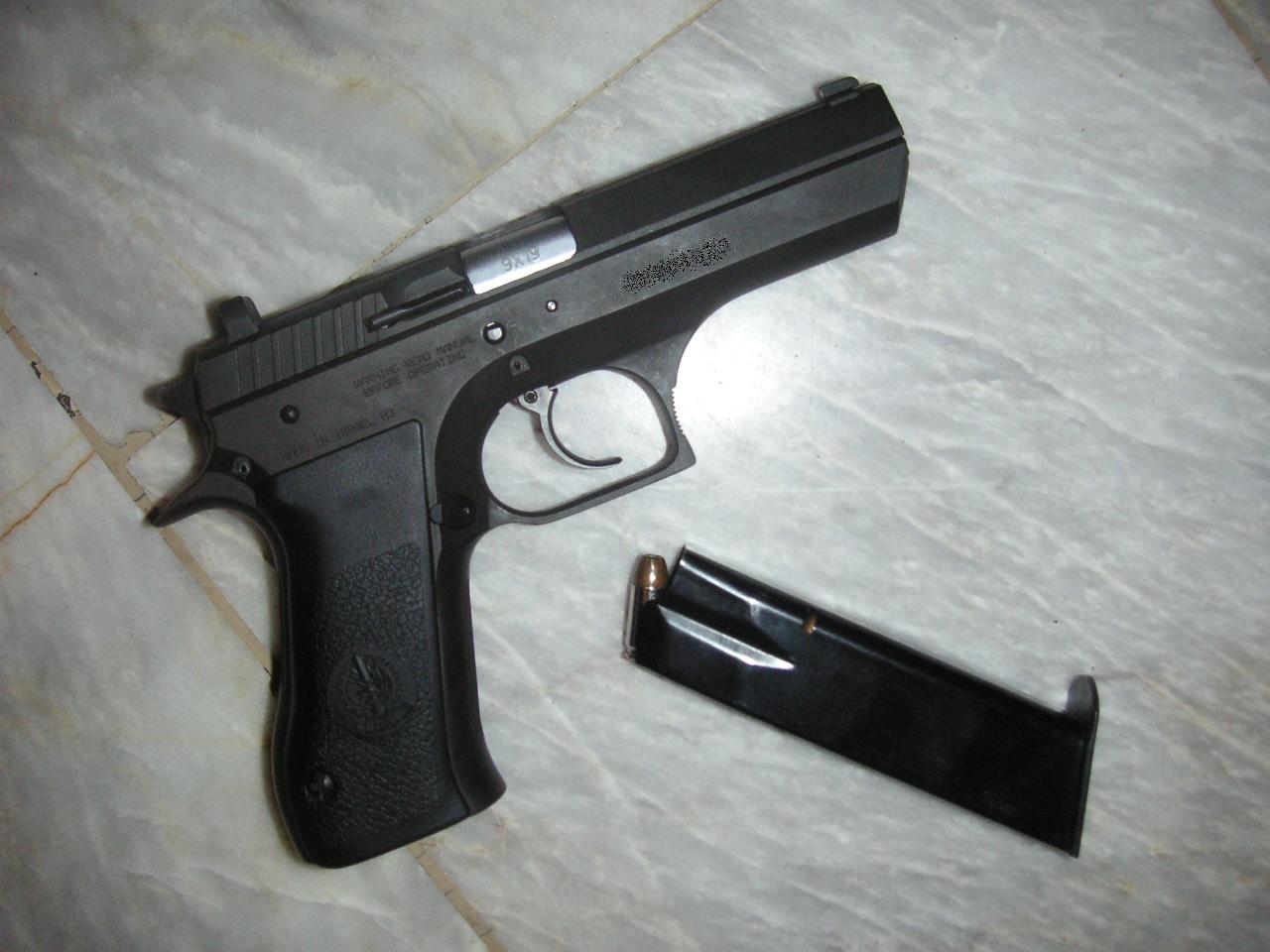
The Jericho 941's reputation spread well beyond Israel's borders during the 1990s and 2000s. A number of countries adopted the pistol for law enforcement and military use, drawn by its reliability, its ergonomics, and the credibility earned through Israeli service. Chile adopted the Jericho for police use. Colombia issued it to certain law enforcement and security elements. Costa Rica, Georgia, Greece, Romania, and Serbia all incorporated the Jericho into their service arsenals. The Philippines evaluated the pistol for national police procurement, with IWI entering a major 2012 bid for 60,000 units — though that contract was ultimately not awarded.
In the United States, the Jericho 941 entered the civilian and law enforcement market under the name "Baby Eagle," imported initially by Magnum Research — the same company that brought the Desert Eagle to American shores. The Baby Eagle name stuck in American gun culture even as the pistol continued to be updated and rebranded, with IWI US eventually beginning direct importation in 2015. Several American law enforcement agencies quietly evaluated or adopted the platform during this period, valuing its all-steel construction and Browning-style single-action trigger feel in its cocked-and-locked configuration.
The .41 Action Express: A Bold Caliber Gamble
One of the most distinctive chapters in the Jericho 941's history involves a caliber that almost was. IMI developed the .41 Action Express cartridge specifically to accompany the Jericho 941 at its launch. The .41 AE used a rebated rim — identical in diameter to the 9mm rim — which meant the same magazine, barrel, and slide could be converted between 9mm and .41 AE by swapping a single barrel and recoil spring assembly. The .41 AE produced performance approaching the .40 S&W at roughly the same time that caliber was being developed, delivering a 170-grain bullet at approximately 1,100 feet per second.
The convertible design was genuinely innovative. Officers who wanted a higher-caliber option could swap barrels in seconds without tools. But the .41 AE never achieved the market traction needed to sustain widespread ammunition availability, and by the mid-1990s the .40 S&W had won the mid-caliber law enforcement market decisively. The Jericho 941 moved on, offering .40 S&W and later .45 ACP variants, but the .41 AE experiment remains a fascinating footnote in the pistol's history.

What Made It a Law Enforcement Favorite
Several practical qualities made the Jericho 941 well-suited to professional service. Its all-steel construction gave it a substantial mass — the full-size model weighs approximately 38 ounces unloaded — which translated directly into reduced felt recoil and steady shot-to-shot recovery. The polygonal barrel delivered consistent accuracy, and the wide-body grip fit a broad range of hand sizes comfortably. The frame-mounted safety gave officers the option to carry in single-action mode for a crisp, short trigger pull on the first shot — a significant advantage in high-pressure encounters where trigger control is critical.
The Jericho's capacity was also ahead of its time for a service pistol of the early 1990s. The full-size 9mm model held 16 rounds in the magazine plus one in the chamber — considerably more than the 9mm pistols it replaced in most Israeli service contexts. This magazine capacity, combined with straightforward field-stripping and a reputation for mechanical reliability in sandy, dusty, and wet conditions, made the Jericho a natural fit for operational environments where maintenance time was limited and failure was not an option.
A Retired Powerhouse
By the 2010s, the Jericho 941 was largely being phased out of frontline service in most of the agencies that had carried it. The Glock 17 and Glock 19 swept through global law enforcement with a combination of lighter weight, modular parts, and lower cost that even the most loyal Jericho advocates found difficult to counter. IWI continued developing the platform — introducing polymer-framed variants, updated ergonomics, and enhanced models like the Jericho Enhanced — but the original all-steel 941 quietly moved into surplus channels and collector hands.
Today, surplus Israeli Police Jericho 941F pistols occasionally appear in the American market, typically in 9mm, showing the wear marks of decades of holster service and the mechanical solidity that made them trusted in the first place. For collectors and enthusiasts, they represent a direct link to a remarkable chapter in law enforcement history — the era when a small nation's weapon designers quietly produced a service pistol that earned the trust of forces from Jerusalem to Bogotá. The Jericho 941 was never the most glamorous pistol in any lineup, but it was exactly what it needed to be: durable, accurate, reliable, and ready.
Sources: IWI US | Wikipedia – IWI Jericho 941 | American Rifleman | Gun Digest | Military Factory | Pew Pew Tactical
Written by
Eugene Warren
The Gun Database contributor