
Command Palette
Search for a command to run...
Command Palette
Search for a command to run...
Gallipoli Lands: BlackMill Games' New WW1 Shooter Hits the Ottoman Front
BlackMill Games has released Gallipoli, a squad based WW1 shooter set on the Ottoman Front, packed with over 50 historically accurate weapons and standout gun animations.

A New Front Opens in the WW1 Game Series
BlackMill Games has released Gallipoli, a squad based first person shooter set on the Ottoman Front of World War I. Launched on August 20, 2026, for PC, PlayStation 5, and Xbox Series X/S with full crossplay, Gallipoli is the fourth entry in the studio's WW1 Game Series, following Verdun, Tannenberg, and Isonzo. Early impressions have singled out the game's weapon handling and animation work as some of the most detailed the series has produced, with reloads, recoil, and weapon inspection modeled closely on how these firearms actually worked in 1915.
The Studio Behind the Series
BlackMill Games is a Dutch independent studio that has spent close to a decade building a reputation around grounded, historically researched World War I shooters. Verdun covered the Western Front, Tannenberg moved to the Eastern Front, and Isonzo took players into the Alps for the Italian campaign. Gallipoli is the series' first trip to the Middle Eastern Theatre, giving BlackMill a chance to depict a front that rarely appears in shooters, despite being one of the most costly campaigns of the entire war.
How the Game Plays
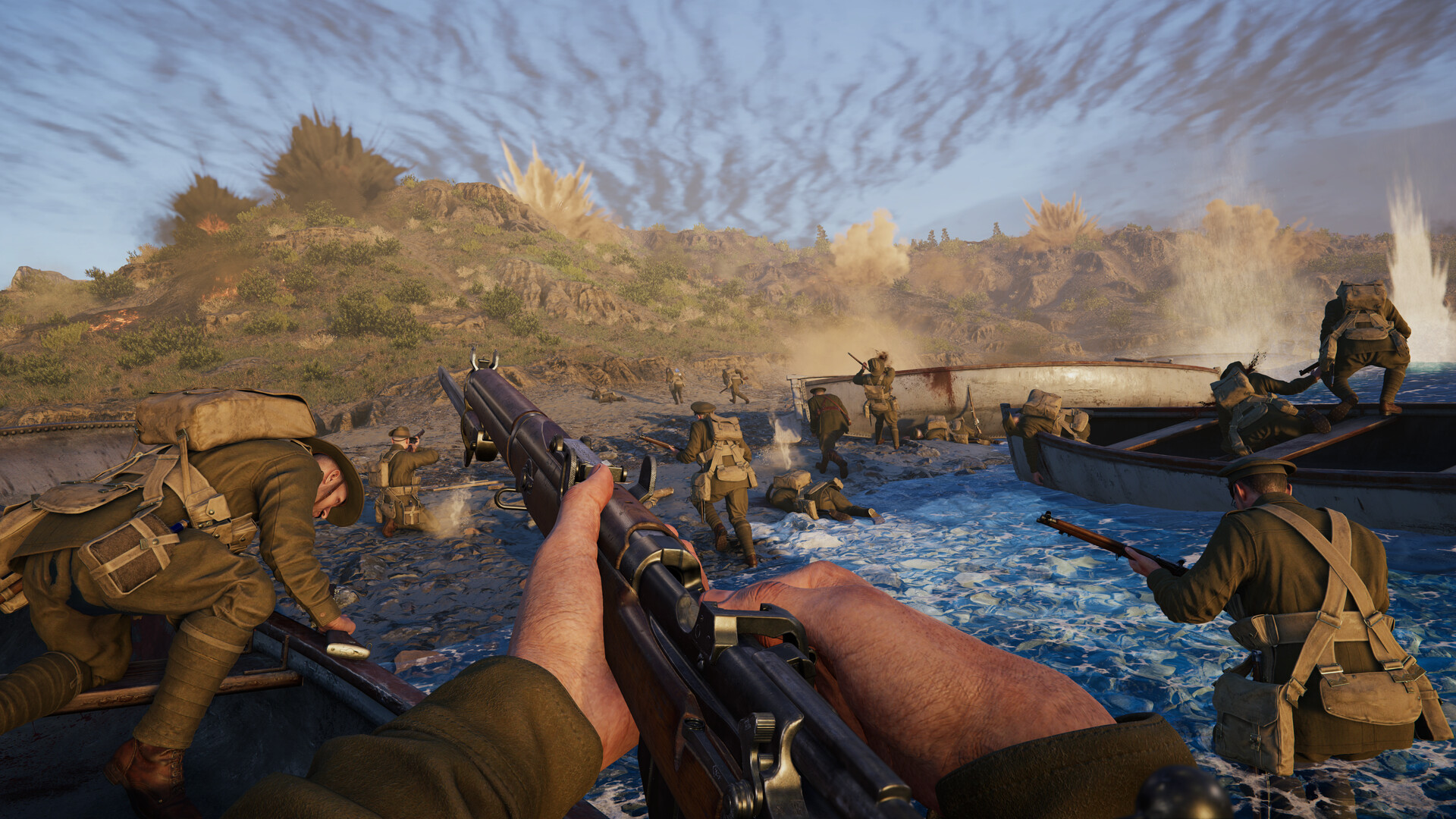
Gallipoli supports battles of up to 50 players, split into squads of 25 on each side, fighting over objectives in a momentum based mode where the attacking team races to complete goals before the defenders can hold them off. Players choose from ten historically inspired classes, including Officer, Sniper, Heavy Machine Gunner, and Stretcher Bearer, each with its own role and weapon selection. Combat is one shot, one kill, which puts a premium on positioning and teamwork rather than fast reflexes alone. Matches take place across recreations of real locations, including the Anzac Cove landings, the fortified beach at Cape Helles where troops disembarked from the SS River Clyde, and the streets of Kut Al Amara during the Mesopotamian campaign.
What Makes the Gunplay Stand Out
Built on Unity 6, Gallipoli leans heavily on weighty, deliberate weapon handling. Reloads are methodical rather than instant, and a soldier's accuracy and reload speed are affected by suppression and familiarity with a given weapon, encouraging players to specialize rather than switch loadouts constantly. Bots fill out public matches alongside human players, keeping the front lines active even when player counts are lower. It is this combination, careful animation work paired with authentic sound design, that has drawn praise from early reviewers and players alike.
The Real Gallipoli Campaign
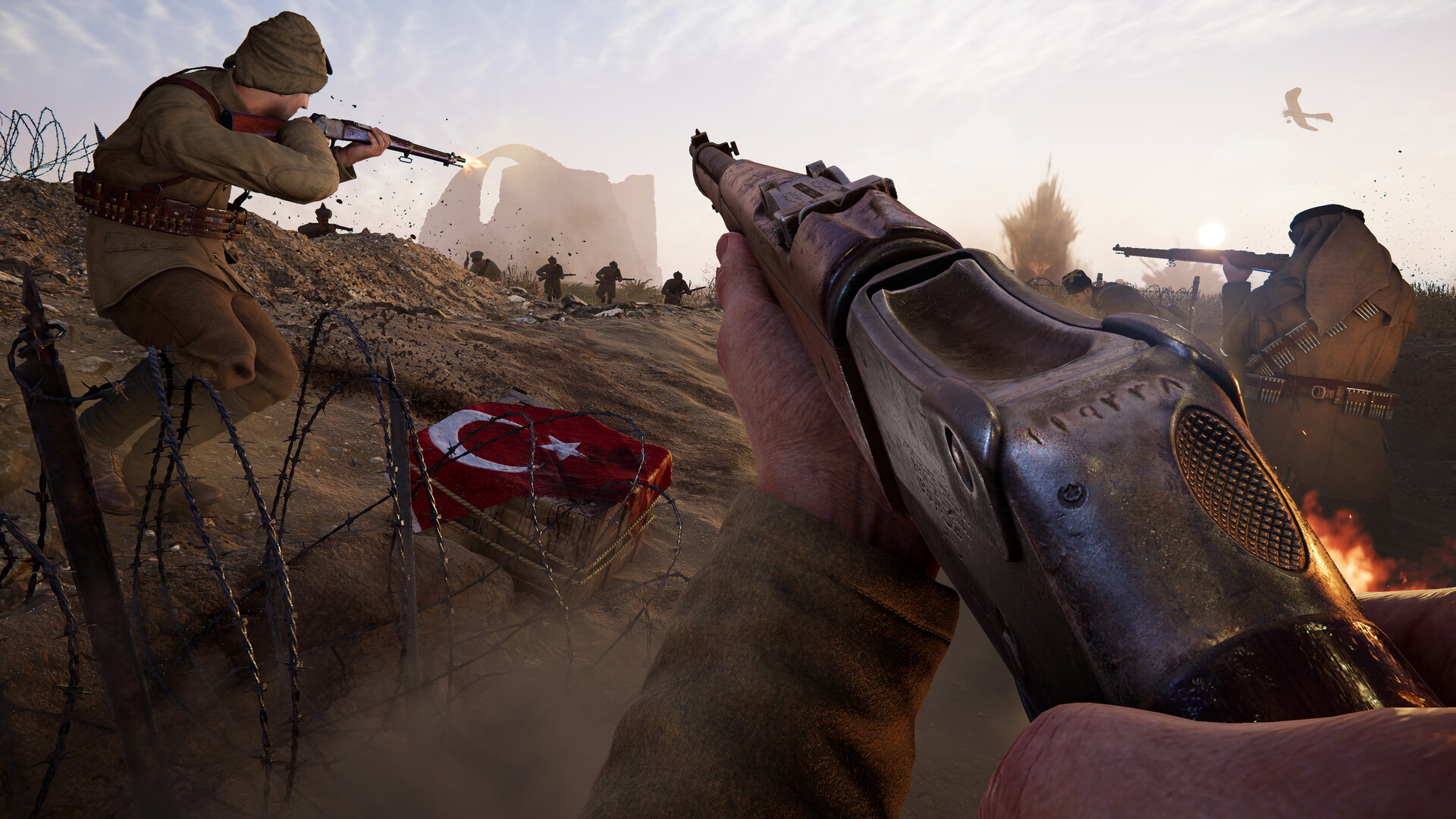
The campaign that inspired the game began on April 25, 1915, when Allied forces, including British, French, and ANZAC troops, landed on the Gallipoli Peninsula in an attempt to force open the Dardanelles and knock the Ottoman Empire out of the war. What was meant to be a quick strike turned into eight months of brutal trench warfare in cramped, exposed terrain. By the time the last Allied troops were evacuated in January 1916, the campaign had cost more than 115,000 British and dominion casualties, roughly 27,000 French casualties, and at least 87,000 Ottoman losses. Of the 50,000 Australians who served at Gallipoli, more than 7,500 were killed, a toll that made the campaign a defining moment in Australian and New Zealand national memory.
The Guns Both Sides Carried
.jpg)
The British and ANZAC forces that stormed the beaches carried the Short Magazine Lee-Enfield, a bolt action rifle chambered in .303 that remained the backbone of Commonwealth infantry for decades. Officers often carried Webley revolvers, while Vickers heavy machine guns and, later in the war, Lewis light machine guns provided sustained fire support. On the Ottoman side, the standard infantry rifle was the Mauser Model 1893, a bolt action design chambered in 7.65mm that Germany had supplied to the Ottoman Army before the war. Ottoman officers frequently carried Mauser C96 pistols, and German made Maxim MG08 machine guns, often manned with German advisors, gave defending trenches their devastating rate of fire.
More Than 50 Weapons in the Arsenal
Gallipoli carries that historical detail directly into its class system. BlackMill Games has built out more than 50 historically accurate weapons and equipment pieces split between the British and Ottoman arsenals, covering rifles, sidearms, machine guns, grenades, and period specific gear like bayonets and entrenching tools. Each weapon is tied to specific classes, so a Rifleman on the Ottoman side reaches for a Mauser while a British counterpart shoulders a Lee-Enfield, and specialist classes like the Heavy Machine Gunner get access to the era's Vickers or Maxim guns rather than something anachronistic. It is a level of granularity that mirrors what BlackMill built for Verdun, Tannenberg, and Isonzo, now applied to a front that has rarely received this kind of attention in a video game.
Closing Out the WW1 Game Series' Tour of the Front
With Gallipoli, BlackMill Games has now covered the Western Front, the Eastern Front, the Alpine Front, and the Ottoman Front across four separate titles, giving players a rare, connected look at how differently World War I was fought depending on where a soldier served. For military history enthusiasts and hardcore shooter fans alike, Gallipoli offers something increasingly rare in the genre, a game willing to slow combat down and let the weapons, uniforms, and terrain of a specific historical moment do the heavy lifting.
Sources: Wikipedia | Steam | Australian War Memorial | Anzac Portal, Department of Veterans' Affairs
Written by
Eugene Warren
The Gun Database contributor