
Command Palette
Search for a command to run...
Command Palette
Search for a command to run...
The AR-15 Debate in 2026: America's Most Controversial Rifle Explained
With 20 million in civilian hands and a Supreme Court showdown looming, the AR-15 remains America's most polarizing firearm — here's the full story.

What Is the AR-15 — And Why Is It the Center of America's Gun Debate?
Few firearms in American history have generated more controversy, more legislation, and more courtroom battles than the AR-15. Owned by an estimated 20 million Americans, banned in nine states plus Washington D.C., and the subject of a Supreme Court case that was declined just last year, the AR-15 sits at the exact crossroads of gun rights, public safety, and constitutional law. Understanding the rifle itself — what it is, how it works, and how it moved from military prototype to living room safe — is essential to understanding the debate that surrounds it.
From ArmaLite to America's Rifle
The "AR" in AR-15 does not stand for "assault rifle" or "automatic rifle" — a persistent and consequential misconception. It stands for ArmaLite Rifle, named after the California company that designed it in 1956. Eugene Stoner's original AR-15 was built on the earlier AR-10 platform and was engineered to be lighter than existing military rifles while firing a high-velocity, small-caliber round. In 1959, ArmaLite sold the design to Colt due to financial constraints. The U.S. military eventually adopted a modified version as the M16 in 1963, and by 1964, Colt began selling a civilian semi-automatic variant — still branded the AR-15 — to the American market. The two names have been legally and culturally separate ever since.
The Federal Assault Weapons Ban: 1994–2004
The modern AR-15 debate was largely shaped by the Federal Assault Weapons Ban (AWB), signed into law by President Clinton in 1994. The law prohibited the manufacture, transfer, and importation of semi-automatic firearms with certain military-style features — including pistol grips, detachable magazines, and bayonet mounts — and capped magazine capacity at ten rounds. AR-15-style rifles, along with a defined list of other firearms, were explicitly banned for civilian sale during this period. A sunset clause was built into the law, and in September 2004 the ban expired without congressional renewal. Sales of AR-15-style rifles surged in the years following, and the gun went on to become one of the most popular rifle types in the United States.
Why Anti-Gun Groups Want It Banned
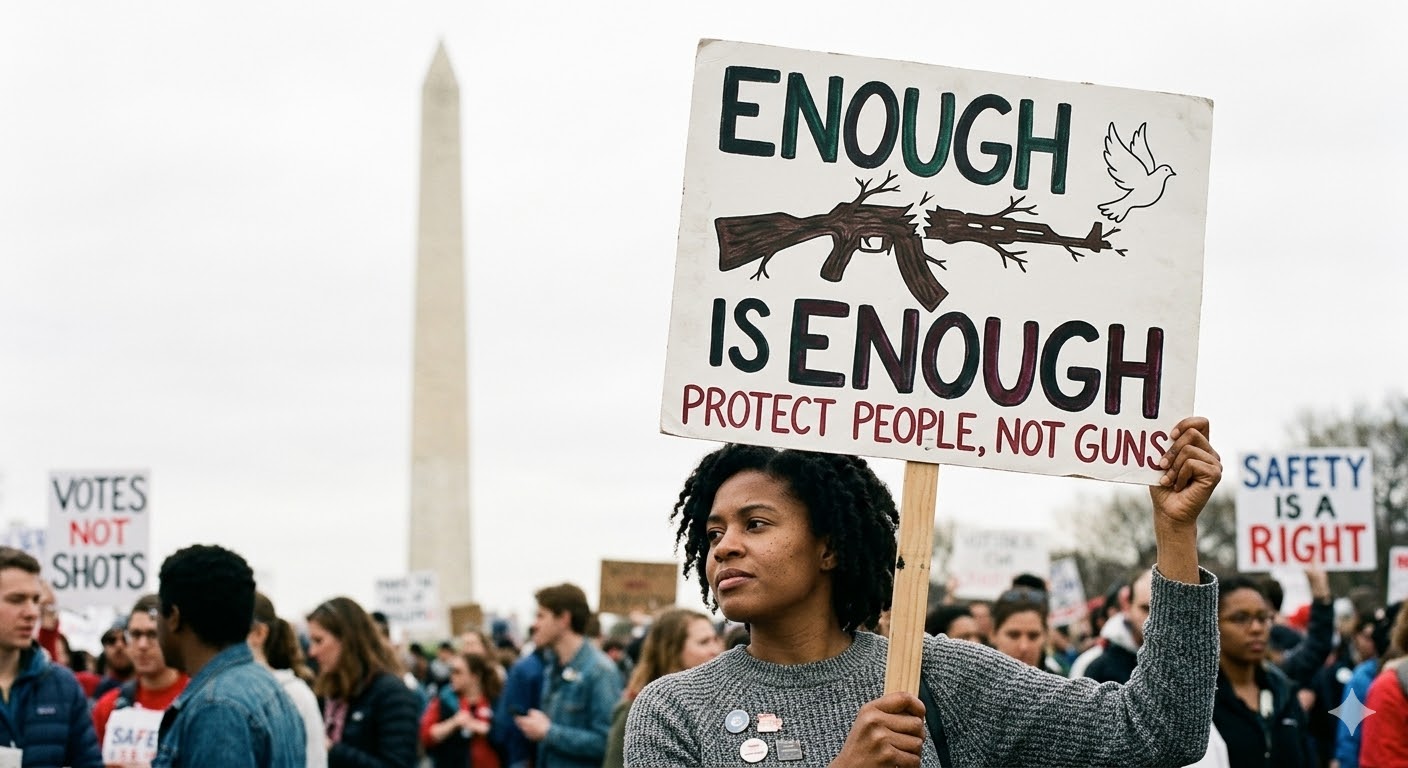
Gun control organizations such as Everytown for Gun Safety, Giffords Law Center, and the Brady Campaign have consistently identified the AR-15 as a priority target for re-regulation. Their arguments center on three main concerns. First, the rifle's design — capable of accepting large-capacity magazines and firing rapidly with each trigger pull — makes it especially lethal in mass shooting scenarios. The AR-15 or variants of it were used in some of America's deadliest mass shootings, including the 2017 Las Vegas attack (60 dead, 413 wounded) and the 2022 Uvalde elementary school shooting (21 dead). Second, critics argue the weapon has no meaningful sporting or self-defense purpose that justifies its civilian availability given the body count. Third, research found that incidents involving high-capacity magazines — commonly paired with the AR-15 — produced 63% higher death rates and 156% higher injury rates compared to incidents without them. Gun control advocates argue that the original AWB was imperfect but demonstrably reduced such attacks during its decade in effect.
The Pro-Gun Counter-Argument
Second Amendment advocates and firearms industry groups push back firmly on each of these points. The National Shooting Sports Foundation (NSSF) notes that the AR-15's semi-automatic action — one round per trigger pull — is mechanically identical to millions of other hunting and sport rifles in common circulation. They argue the rifle is erroneously conflated with the military's fully automatic M16/M4 variants, which fire continuously while the trigger is held and have been tightly regulated under the National Firearms Act (NFA) since 1986. Gun rights proponents also contend the AR-15 is widely used for hunting (particularly varmint and medium-game hunting), competitive shooting sports like 3-Gun and precision rifle competitions, and home defense — legitimate civilian purposes that, they argue, place it squarely within Second Amendment protection. The "common use" doctrine, derived from the Supreme Court's landmark Heller v. District of Columbia (2008) decision, holds that firearms in common use for lawful purposes are constitutionally protected — and with 20 million units in civilian hands, the AR-15 easily qualifies.
The Legal Landscape in 2026: A Patchwork of State Laws
At the federal level, the AR-15 is legal to own under current law. The expired 1994 ban has never been replaced, and while the Assault Weapons Ban of 2025 (S.1531) was introduced in the 119th Congress, it has not advanced significantly. However, nine states plus Washington D.C. have enacted their own assault weapons restrictions: California, New York, New Jersey, Connecticut, Delaware, Hawaii, Maryland, Massachusetts, Rhode Island, and Washington state. These laws vary considerably in scope — some target specific features like pistol grips and folding stocks, others ban specific named models. Enforcement and legal challenges have varied equally widely. In states like Texas and Arizona, purchase and ownership remains relatively unrestricted beyond federal background check requirements.
The Supreme Court Question That Won't Go Away
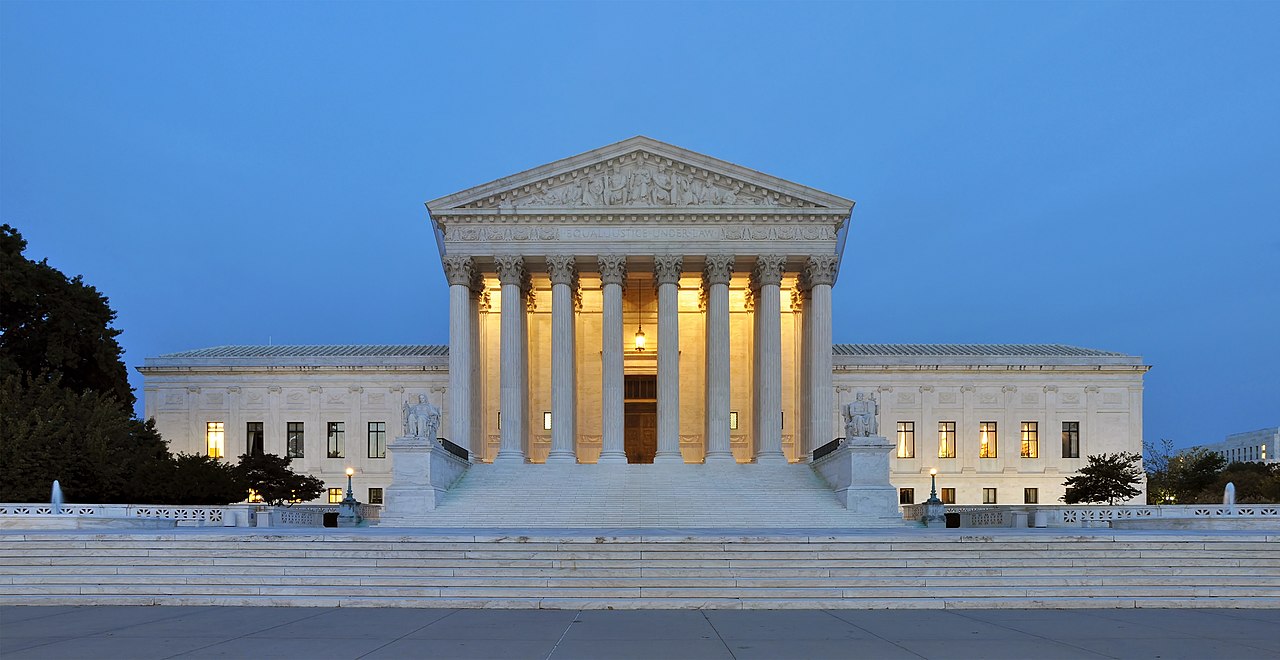
The most significant legal development in recent years involves Maryland's assault weapons ban and a case called Bianchi v. Brown. In August 2024, the en banc Fourth Circuit Court of Appeals upheld Maryland's ban by a 10-to-5 vote, ruling that AR-15-style rifles fall outside Second Amendment protection because they are military-style weapons ill-suited to civilian self-defense needs. In June 2025, the U.S. Supreme Court declined to hear an appeal of that ruling — though Justices Alito, Gorsuch, and Thomas indicated they would have granted the petition. Justice Brett Kavanaugh, writing separately, stated that the Court "should and presumably will address the AR-15 issue soon, in the next Term or two." That signal is widely interpreted as a promise that the constitutional status of state-level AR-15 bans will eventually be decided at the nation's highest court — a ruling that could either validate or strike down restrictions in all nine states simultaneously.
What This Means for Firearms Owners Today
For the roughly 20 million Americans who currently own an AR-15 or similar platform, the immediate legal picture is relatively stable — federal law permits ownership, and only residents of the nine restricted states face substantive limitations. However, the legal landscape is genuinely unsettled. The Supreme Court's anticipated future ruling could swing the debate dramatically in either direction. Firearms owners in restricted states have limited avenues for challenge until SCOTUS speaks; those in permissive states should remain aware of pending legislative activity, including the 2025 Senate bill and any state-level proposals that may follow. The AR-15 debate is not approaching a resolution — it is approaching its most consequential legal moment yet.
Sources: ArmaLite AR-15 — Wikipedia | NPR, "A Brief History of the AR-15" | NSSF Firearms Data | NBC News — AR-15 Resistance Explained | Congress.gov — Assault Weapons Ban of 2025 (S.1531) | Harvard Law Review — Bianchi v. Brown | Supreme Court Opinion No. 24-203 (Kavanaugh, J.)
Written by
Eugene Warren
The Gun Database contributor