
Command Palette
Search for a command to run...
Command Palette
Search for a command to run...
The .22 LR in 2026: Still the Backyard Shooter's Best Friend?
From Olympic biathlon to backyard plinking and the self-defense debate — the .22 LR is 139 years old and still the world's most produced cartridge. Here's why.

Why the .22 LR Still Matters in 2026
Ask any experienced shooter to name the cartridge that introduced them to the hobby, and a significant number will say the same thing: the .22 Long Rifle. Introduced in 1887, the .22 LR is not just the world's oldest surviving centerfire-era cartridge — it is, by a staggering margin, the most produced and sold ammunition round on Earth. With an estimated 2 to 2.5 billion rounds manufactured every year, it outpaces every pistol and rifle cartridge combined. But sales figures and nostalgia aside, does the .22 LR still earn its place in the modern shooter's range bag? In 2026, the answer is a clear yes — though the reasons have evolved considerably from the days of simple backyard tin-can shooting.
A Cartridge Born in 1887 — Still Going Strong
The .22 Long Rifle was developed by the J. Stevens Arms and Tool Company and introduced in 1887, combining the case of the .22 Long cartridge with the heavier 40-grain bullet of the .22 Extra Long. The result was a remarkably balanced round: enough velocity to be useful for small game and target work, yet mild enough in recoil and noise to be accessible to virtually any shooter. The cartridge fires a .223-inch diameter lead or copper-jacketed bullet at velocities typically ranging from 1,000 to 1,650 feet per second depending on the load. Standard velocity loads push around 1,070 fps; high-velocity loads hit closer to 1,200–1,260 fps; and hypervelocity loads like CCI Stingers can exceed 1,640 fps from a rifle barrel.
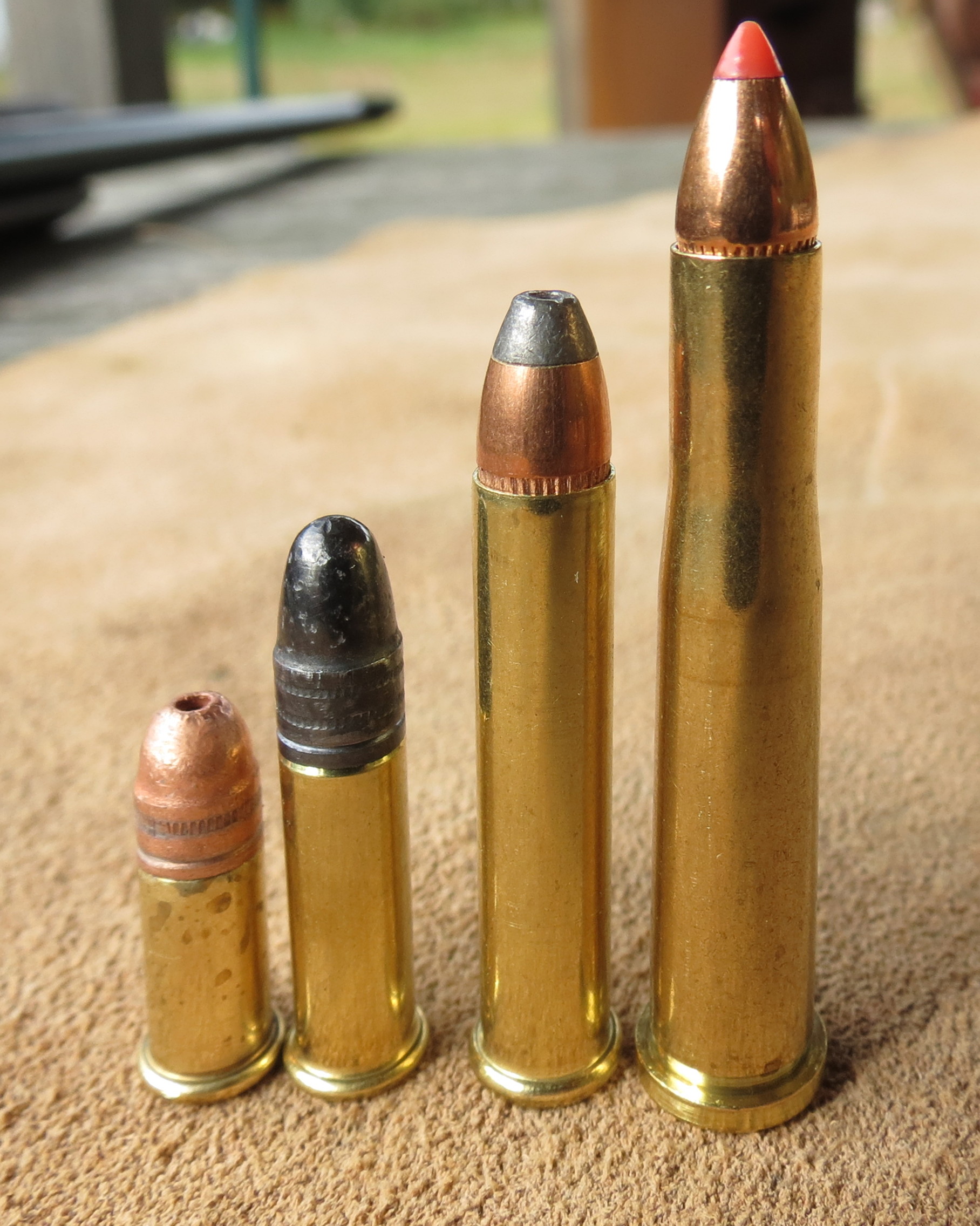
Left to right: .22 Short, .22 Long Rifle, .22 WMR (Magnum), and .22 Hornet — showing the .22 LR's place in the rimfire family. Image: Noahsachs, CC BY-SA 3.0.
The rimfire ignition design — where the primer compound is embedded in the soft rim of the cartridge case — dates back to the percussion era and is one of the simplest and cheapest ammunition designs ever created. That simplicity is central to the .22 LR's economics: in normal market conditions, .22 LR bulk packs sell for between $0.05 and $0.10 per round, making it among the cheapest centerfire-era rifle ammunition available anywhere.
The Backbone Rifle: Ruger, CZ, and the .22 LR Platform Boom
No discussion of the .22 LR is complete without acknowledging the platform ecosystem it has built over 140 years. The Ruger 10/22, introduced in 1964, is arguably the most iconic .22 LR rifle ever produced — with over 7 million units sold and a vast aftermarket of stocks, barrels, triggers, and optics, it functions almost like a modular system. CZ's 452 and 457 series have captured a dedicated accuracy-focused audience. Savage's A22 semi-automatic and the Browning SA-22 takedown remain perennially popular. On the handgun side, Ruger's Mark IV, Smith & Wesson's Victory, and the Browning Buck Mark provide pistol shooters with a rich selection of purpose-built .22 LR platforms. This depth of available hardware is itself a reflection of the cartridge's sustained demand.

The Ruger 10/22 Stainless with Butler Creek folding stock — over 7 million sold since 1964 and still one of the best-selling .22 LR platforms in the world. Image: Firstinduty, Public Domain.
Plinking, Training, and the Entry-Level Advantage
The .22 LR's primary identity has always been as a beginner's cartridge and a relaxed range day companion — and that role has not diminished. Low recoil, minimal muzzle blast, and cheap ammunition make it the near-universal recommendation for first-time shooters, youth programs, and anyone teaching basic marksmanship. Range drills that would cost $30–$50 in 9mm can be replicated in .22 LR for $5–$8. That cost difference is significant enough that experienced shooters routinely use a .22 LR analog to their primary carry gun to maintain muscle memory without burning through expensive centerfire ammo. Ruger and Browning have both capitalized on this with 1:1 .22 LR conversions for full-size pistols.
Competitive Sports: From Biathlon to Rimfire World Series
The .22 LR's competitive credentials are frequently underestimated by those who associate it only with casual shooting. In biathlon — the Olympic sport combining cross-country skiing and precision rifle shooting — the .22 LR is mandatory. The International Biathlon Union standardized on the cartridge in 1978, and it remains the only permitted caliber at all IBU competitions including the Winter Olympics. Competitors fire at 50-meter targets measuring 45mm (prone) and 115mm (standing), demanding exceptional precision from the round. More than 97% of all competitive biathletes worldwide use the Anschütz 1827 F, a purpose-built .22 LR bolt-action designed specifically for the sport.
Beyond biathlon, the .22 LR is the foundation of the Rimfire World Series, NRL22 (National Rifle League), and dozens of sanctioned precision rimfire competitions that have exploded in popularity since 2015. NRL22 events use the same course-of-fire format as centerfire precision rifle matches but at reduced distances, making them accessible and affordable. Steel Challenge, a speed-shooting pistol discipline, also heavily features .22 LR divisions — and many shooters who compete in centerfire divisions maintain a .22 LR kit specifically for affordable practice runs.
The Self-Defense Debate: A Real Crowd, a Real Argument
No topic in the .22 LR discussion generates more disagreement than self-defense. The mainstream firearms training community has long treated the .22 LR as definitively inadequate for defensive use — its relatively low energy output (approximately 100–140 foot-pounds), rimfire ignition reliability concerns, and limited penetration compared to 9mm all contribute to that consensus. The FBI's minimum penetration standard of 12 inches in ballistic gelatin is achieved by some .22 LR loads — notably the CCI 40-grain Velocitor hollow-point — but inconsistently across barrel lengths and load types.
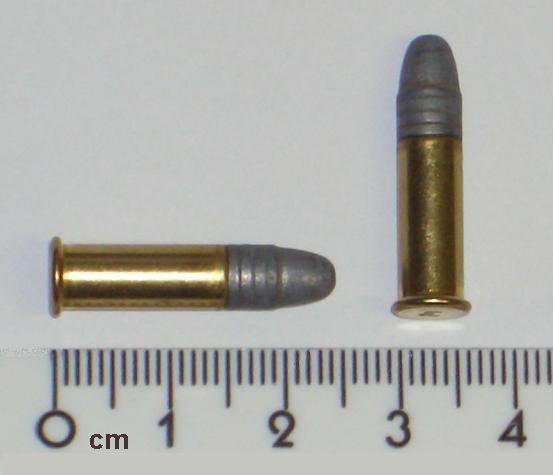
.22 Long Rifle rimfire cartridges — approximately 2 to 2.5 billion rounds are produced annually, making it the world's most widely manufactured ammunition. Image: Uwe Schwöbel, CC BY-SA 3.0.
Yet a serious minority of the firearms community makes a practical case for the .22 LR as a defensive option in specific circumstances. Their argument: a .22 LR that is shot accurately and repeatedly is more effective than a .45 ACP that misses or is poorly controlled. Studies cited in this discussion show that .22 LR shooters can often deliver twice as many accurate hits in the same time as with heavier-recoiling centerfire rounds. For elderly shooters, individuals with limited grip strength, or those managing pain conditions that make recoil difficult, the .22 LR may genuinely be the most realistic defensive option available. In 2021, both Federal and CCI released defensive .22 LR loads specifically engineered for better expansion and penetration — Federal's Punch and CCI's Uppercut — signaling that the ammunition industry sees real demand in this space.
The .22 LR in 2026: Prices, Availability, and the Post-Shortage Era
Between 2012 and 2016, the .22 LR experienced severe supply shortages in the United States, with bulk bricks disappearing from shelves for months at a time and secondary market prices reaching absurd levels. That era is firmly behind us. As of 2026, .22 LR supply chains have stabilized. Major manufacturers including CCI, Federal, Remington, and Winchester maintain steady production, and bulk 500-round bricks are widely available in the $25–$50 range depending on quality tier. Match-grade ammunition from Lapua, Eley, and Midas remains an active niche market catering to precision rimfire competitors who spend considerably more per round — Lapua Center-X, for example, retails around $0.30–$0.40 per round — but is readily available through specialist retailers.
Verdict: Still King of the Backyard in 2026
The .22 LR has outlasted dozens of cartridges that were supposed to replace or obsolete it. It survived the centerfire revolution, two world wars, the polymer pistol era, and the 3-gun craze. In 2026, it remains the best entry point into the shooting hobby, the backbone of competitive rimfire sports, a legitimate training aid for serious shooters, and a quietly debated option for defensive use. Its limitations are real and well-documented. But so is its staying power — more than 2 billion rounds produced annually, a platform ecosystem spanning over a century, and a role in the Winter Olympics are not the hallmarks of a cartridge that has lost its relevance. The backyard is still very much its domain.
Sources: American Rifleman — The .22 LR: History & Performance | Wikipedia — .22 Long Rifle | NRA Women — Do .22 LR Pistols Make Sense for Self-Defense? | Olympics.com — Biathlon Rifle Characteristics | CCI — Rise & Reign of .22 LR | American Rifleman — .22 LR for Self-Defense Ammo Test
Written by
Eugene Warren
The Gun Database contributor